
Briscoe County Arrest History
The Briscoe County Sheriff's Office is the main documented local law-enforcement agency. Texas DPS troopers can also create highway enforcement and arrest records. No official Silverton or Quitaque police department, campus police, constable arrest feed, or local daily blotter was found. Briscoe County justice courts do not make arrests, but their warrant and magistration records can explain why custody occurred.
An arrest history joins records made at different moments. The arresting agency documents alleged conduct and legal authority. A receiving jail records intake and release. A magistrate records warnings, probable cause, counsel issues, and bail. If a prosecutor files a charge, the combined County/District Clerk opens the court file. For Class B misdemeanors and more serious events, agencies also report into the Texas DPS criminal-history chain.
Briscoe County Has No Jail
The sheriff's official notice says, in capital letters, “WE DO NOT HAVE A JAIL.” Therefore, Briscoe County has no county roster, booking profile, jail lobby, visitation provider, inmate mail format, deposit kiosk, or local booking-photo gallery. After an arrest, dispatch must identify the facility that accepted the person. The receiving county's official roster and rules then control bond, visits, release, mail, and booking-copy access.
The Briscoe County Sheriff page publishes the no-jail notice and the office contacts.
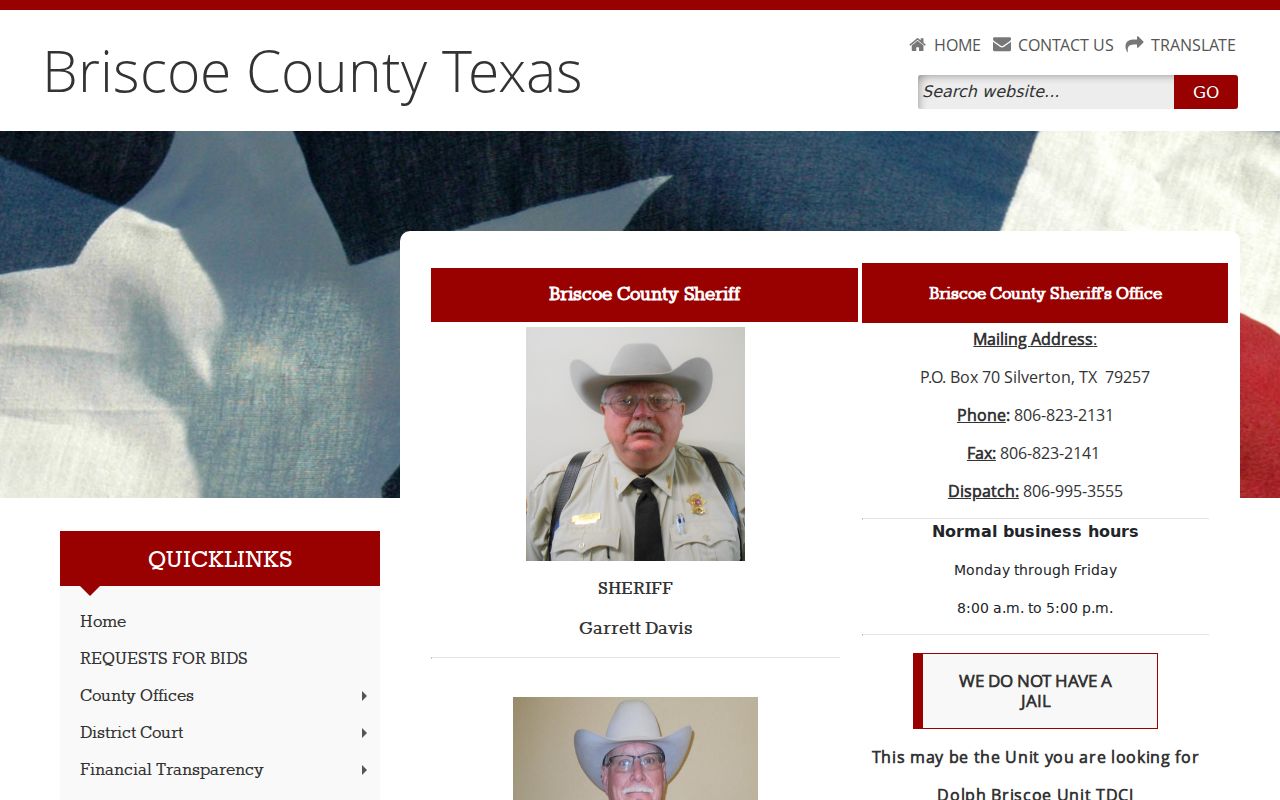
That official notice is the reason a local roster search fails and why dispatch is the first custody-routing source.
Briscoe County Sheriff's Office
415 Main Street courthouse counter
P.O. Box 70, Silverton, TX 79257
806-823-2131
Dispatch: 806-995-3555
Monday through Friday, 8:00 a.m. to 5:00 p.m.
Fax: 806-823-2141
Looking Up Briscoe County Arrests
No online Briscoe booking log exists. A complete search uses the live custody channel first, then follows the record across the arresting agency, receiving jail, courts, and state repository.
- Call dispatch at 806-995-3555 with the full name and approximate arrest time, and ask for the public custody location and booking contact.
- Contact the named receiving jail and use only its official roster or records desk. Confirm a match with lawfully displayed identifiers.
- Ask the sheriff for the incident or arrest report number. If no routine copy is offered, submit a focused written request under the Texas Public Information Act.
- Contact JP1, JP2, or the combined County/District Clerk for magistration and filed-case records. A filing can appear after the arrest.
- Use Texas DPS public history for reported convictions and deferred adjudications, or a DPS fingerprint personal review when checking and correcting one's own full Texas record.
- If state custody follows, search TDCJ. If the case ended without conviction, assess current expunction or nondisclosure law instead of assuming the arrest disappeared.
For the prosecution and final court result, continue to the Briscoe County criminal court case file.
Four Records From One Briscoe Arrest
Apparent conflicts often reflect timing rather than error. An officer may arrest on one allegation, a jail may book that allegation with a separate hold, and a prosecutor may file a reduced or different charge. The later judgment can dismiss one count and resolve another.
| Record | Who keeps it | What it answers |
|---|---|---|
| Arrest or offense report | Sheriff, DPS, or other arresting agency | Why and how the arrest occurred |
| Booking record | Outside receiving jail | Intake, holds, bond, and release |
| Magistrate record | JP or other magistrate | Warnings, counsel, probable cause, and bail |
| Court and CCH records | Clerk and Texas DPS | Filed charge, disposition, sentence, and reported state cycle |
Searchers should keep the report number, booking identifier, court cause number, and Texas tracking identifiers separate. They do not label the same document.
Inside a Briscoe County Arrest Record
A sheriff report may contain the agency report number, event and report dates, location, alleged offense, arrest authority, officer, subject identifiers, involved roles, evidence or property, vehicles, probable-cause narrative, and transport destination. The receiving jail controls its own intake fields, and no official source identifies the standing facility.
| Report number | Arresting-agency identifier used to request the incident or arrest report. |
|---|---|
| Arrest date and time | The custody event, which can differ from booking time. |
| Arresting agency | Sheriff, Texas DPS, or another agency with legal authority. |
| Alleged charge | The accusation at arrest, which can later change or be declined. |
| Transport destination | The outside facility that created the booking file. |
| Bond or hold | Facility and court information that can change after magistration. |
| Booking photo | No Briscoe photo portal or county policy is published; ask the receiving jail. |
| Release status | Release time and method where the receiving facility makes them public. |
Public copies may omit confidential identifiers, juvenile material, protected victim information, and details that would interfere with an active investigation.
Briscoe Highway Arrests and Crash Reports
A Texas DPS trooper can create a highway arrest or incident record that the sheriff does not hold. Request the law-enforcement report from the agency that created it. Crash reports use the official TxDOT Crash Report Online Purchase System or CRIS route, which generally asks for the crash date, location, involved name, and report number when known. Live checkout shows applicable fees.
The TxDOT crash-record page explains the state channel.
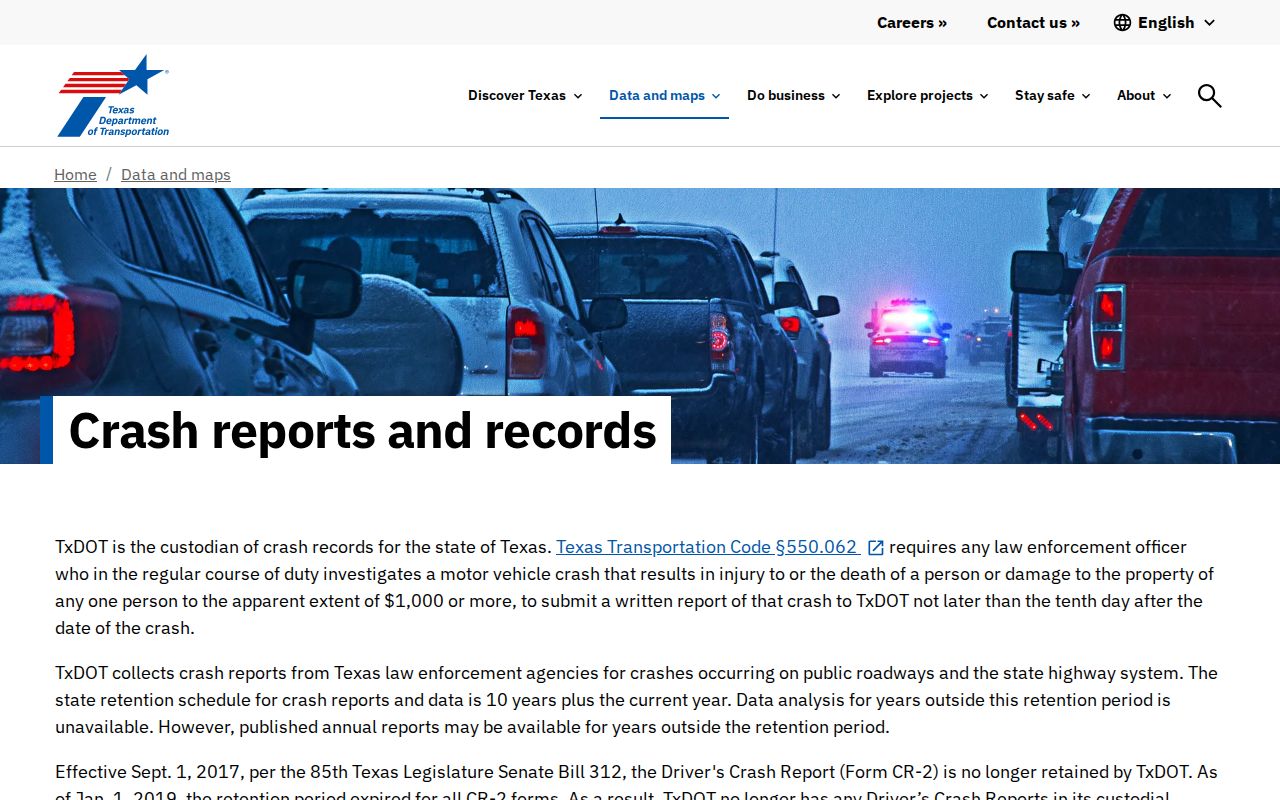
This channel is for crash documentation, not a substitute for the arrest report, outside booking file, or Briscoe court record.
Booking Logs and Recent Arrests
There is no Briscoe County booking log because there is no local jail. The county does not name a regular receiving-jail partner, so guessing a neighboring county can produce a false negative. Dispatch is the reliable first step, followed by the specific facility's official roster, phone line, or records desk.
A roster commonly covers current or recent custody and may remove an entry after release. It does not provide a lifelong Briscoe County arrest history. VINELink may add custody notifications if the receiving facility participates, but its coverage must be checked rather than assumed.
The Texas VINELink interface is the official notification supplement documented in the research.
Use a notice as a lead and confirm current custody directly with the holding facility.
TDCJ Is Not a Briscoe Booking Roster
The Texas Department of Criminal Justice Inmate Information Search covers state custody and related public sentence information, not a recent Briscoe County booking. Search by last name and first name, or use a TDCJ number or Texas SID number. Public categories can include the current facility, offense, sentence, projected release date, and parole eligibility where applicable.
The official TDCJ Inmate Information Search shows its available search fields.
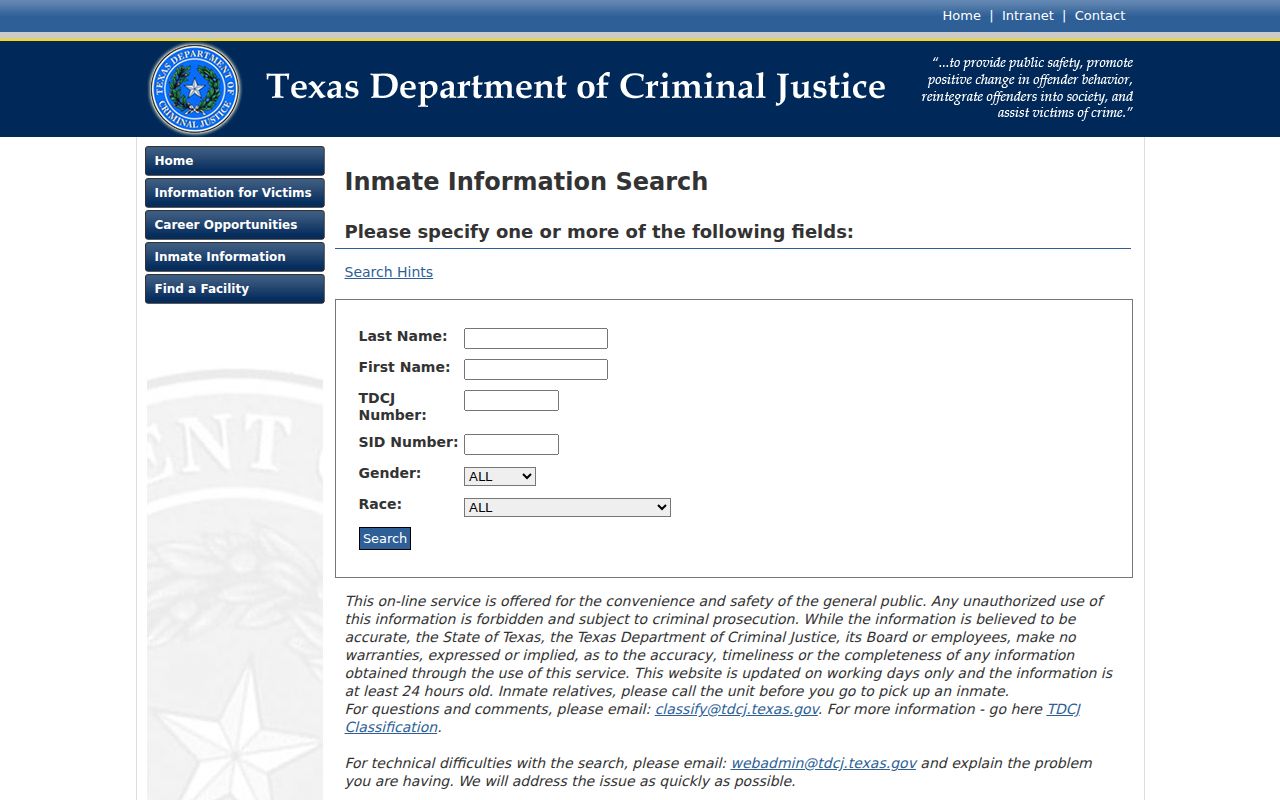
A TDCJ result marks a later state-custody stage. It does not show the local intake, pending bond, magistrate, or every county charge.
How Briscoe Arrests Reach Texas DPS
For an arrest involving a Class B misdemeanor or a more serious accusation, the booking agency takes identifying fingerprints and sends the event and tracking control number into Texas criminal-history reporting. Prosecutors, courts, custodial agencies, and supervision offices report later actions. The resulting Computerized Criminal History record joins submissions from several custodians.
The public Texas DPS Criminal History Name Search is narrower than a personal fingerprint record review. It makes reported convictions and deferred adjudications available, not every arrest or complete case file. A missing or delayed disposition can occur. DPS requires a certified disposition from the court of jurisdiction to correct that kind of gap.
Note: A demographic name match can identify the wrong person; fingerprints are the reliable route for reviewing one's own Texas record.
Arrests Are Not Convictions
A Briscoe County arrest record documents custody and an accusation. A conviction record documents a court's judgment of guilt. A prosecutor may decline a case, a court may dismiss a charge, or a trial may end in acquittal. Even when a conviction follows, the filed offense can differ from the arrest allegation.
| Arrest Record | Conviction Record |
|---|---|
| Created by the arresting agency and receiving jail | Created through the court and reported to DPS |
| Shows that custody occurred on an allegation | Shows a judgment of guilt on a filed charge |
| Lives with the agency and outside jail | Lives in the clerk file and state reporting system |
| Can be followed by release, no filing, dismissal, or prosecution | Can lead to sentence, appeal, supervision, and possible legal relief |
Note: An arrest is not proof of guilt, and many arrests do not end in a conviction on the original allegation.