
Sex Offender Checks in Briscoe County
The Texas Public Sex Offender Registry is the main public channel for Briscoe County sex offender records. Texas DPS manages the central system under Code of Criminal Procedure Chapter 62. Searchers can use a person’s name or an area such as an address, city, ZIP code, or county. A separate higher-education search is also available. The ordinary public lookup is free and does not require the subscription account used for some downloads or notices.
Start with all known names, including aliases, then run an area search around Silverton, Quitaque, or another Briscoe County location. The two routes answer different questions. A name search follows a known person, while a geographic search shows public entries tied to a place. Compare the photo, date of birth, physical description, offense data, and registration authority before drawing a conclusion. Contact the sheriff when a profile appears stale or a compliance issue needs review.
Briscoe County Registration Hours
The Briscoe County Sheriff’s official page gives a rare local detail: sex offender registrations take place Tuesday and Thursday from 9:00 to 11:00 a.m., unless sheriff staff approve another time. Call 806-823-2131 before appearing. Those hours govern registration appointments, not when the public may use the DPS website.
Briscoe County Sheriff
415 Main Street
Mail: P.O. Box 70
Silverton, TX 79257
806-823-2131
Registration: Tuesday and Thursday, 9:00-11:00 a.m., unless otherwise approved.
Briscoe County has no separate police department listed for Silverton or Quitaque. The sheriff is therefore the documented local contact. Registration duties can depend on residence and statutory arrangements, so the office should decide the correct reporting authority rather than the searcher guessing from a mailing address.
How to Search the Texas Public Sex Offender Registry
The registry offers several routes, and each control should be read with care. The exact radius choices were not captured during research, so no mileage option should be assumed. Map and list views provide geographic context, but they do not fix lot lines or establish where a person is standing today.
- Open the official Texas DPS registry and review its conditions of use.
- Search by name when a person is known, including reasonable alias or spelling variants.
- Run an address, city, ZIP, or Briscoe County area search as a separate check.
- Open the full profile and compare several identifiers, the registration authority, offense details, and compliance status.
| Field or Control | Type | Required | Notes |
|---|---|---|---|
| Name | Text | Route-specific | Use first and last names plus aliases as indexed. |
| Address, City, ZIP, County | Text or dropdown | Area-route dependent | Select Briscoe County or enter a Silverton or Quitaque location. |
| Radius or Proximity | Dropdown or map | Unverified | Current mileage choices were not captured. |
| Higher Education | Text or filter | Route-specific | This is a separate official search mode. |
| Map or List | View control | No | Use for context, not property-boundary precision. |
| Search or Clear | Button | Action | Exact button wording can change. |
Briscoe County Registry Interface
The official DPS search screen shows how Texas separates name, area, and other lookup paths.
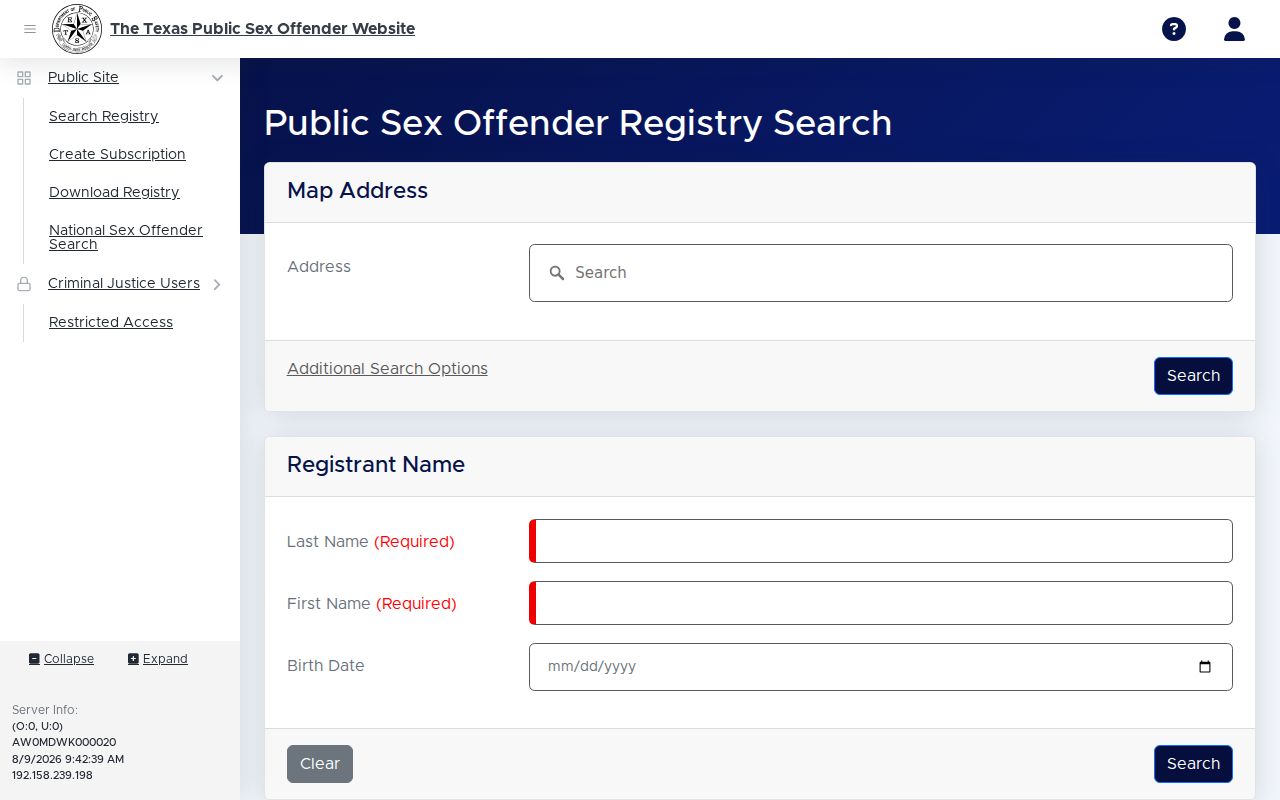
The screen reinforces why a complete Briscoe County search should not depend on one field or one map pin. Search routes can return different relevant records.
Inside a Registry Profile
A public profile combines identity, appearance, residence, offense, and registration facts. It can show enough detail to distinguish people with similar names, yet Texas law keeps sensitive fields out of public view. Article 62.005 excludes Social Security and driver’s-license numbers, phone numbers, online identifiers, employer identity and contact details, victim-identifying information, confidential DPS-added data, and juvenile information ordered nonpublic.
| Name and Aliases | Indexed current name and reported aliases. |
|---|---|
| Photo and Description | Current color photo, age or birth date, sex, race, height, weight, hair and eye color, and displayed marks or tattoos. |
| Residence | Registered address or a described location, plus map context. |
| Offense | Reportable offense, statute or jurisdiction, adjudication date, and punishment. |
| Risk Level | Texas numeric risk assessment, which is not a federal SORNA tier. |
| Status | Registration authority and displayed verification or compliance information. |
| Other Public Fields | Higher-education association and qualifying vehicle details can appear. |
A public omission is not proof that the underlying data never existed. It may be confidential by statute, excluded from the public product, or awaiting an agency update. Use several profile fields to test identity and send correction or compliance questions to the responsible authority.
Texas Registration Levels and Requirements
Texas risk levels describe assessed danger, while registration duration comes from the offense and circumstances listed in Article 62.101. That distinction matters. A Level 2 label is not a federal “Tier II” term, and a Level 3 label does not by itself set a lifetime term. Verification frequency also follows statutory conditions, including the number of reportable convictions or a civil commitment.
| Concept | Meaning | Duration or Verification Effect |
|---|---|---|
| Risk Level 1 | Low assessed danger or likelihood of sexual reoffense | Supports notification; does not itself set duration. |
| Risk Level 2 | Moderate assessed danger | Not a federal Tier II duration. |
| Risk Level 3 | High assessed danger | Enhanced notice can apply; duration remains offense-specific. |
| Lifetime | Enumerated offenses or circumstances | Continues until death unless statutory early termination applies. |
| Other Adult Term | Offense-specific registration | Generally ten years after release or discharge from supervision, whichever is later. |
| Juvenile Term | Juvenile-specific statutory measure | Generally ten years; a court can make some information nonpublic. |
Verification is generally annual. Two or more reportable convictions or adjudications ordinarily lead to six-month verification, while a civilly committed sexually violent predator verifies every 90 days. Changes commonly must be reported within seven days under the applicable rule. These schedules should not be confused with the sheriff’s local appointment hours.
Briscoe County High-Risk Notification
DPS sends English and Spanish postcards for a high-risk move under the statutory geographic standard. The usual reach is one mile in an unsubdivided area or three blocks in a subdivided area. In a broad, sparsely settled county, those two measures can lead to very different notice areas. Local authorities may also use publication, meetings, notices, or a local website.
The Texas DPS registration program page explains the state’s public-notification structure.
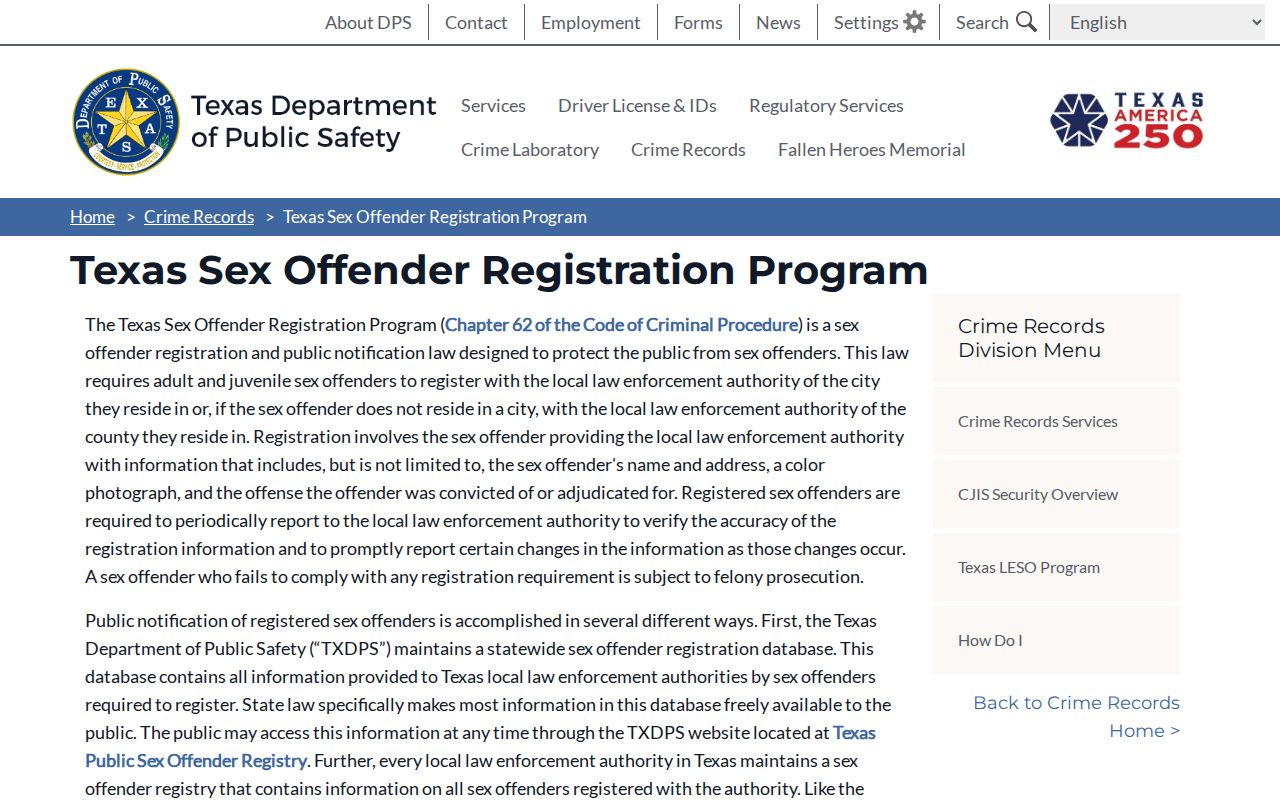
This state overview helps place a local Briscoe County notice in context without turning risk level into a registration-duration shortcut.
Cross-State Briscoe County Searches
A zero-result county search does not end the inquiry when a person may have lived elsewhere. The National Sex Offender Public Website, operated by the U.S. Department of Justice, searches participating state, territorial, and tribal registries. It is the correct official second layer for movement across state lines.
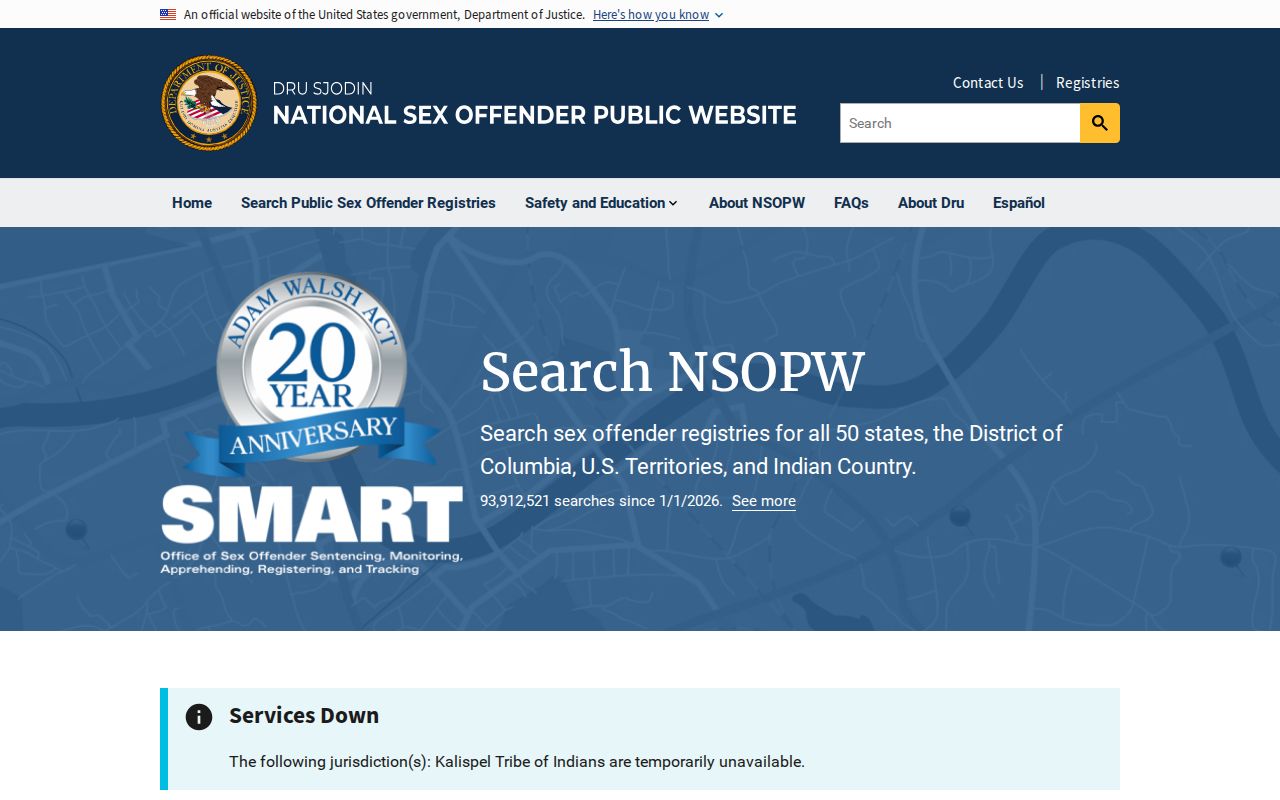
NSOPW broadens geography, but the source registry remains the place to read the current profile and resolve state-specific fields. Recheck known aliases and prior locations when a name is common.
Briscoe County Public Information Route
The DPS portal is the fastest public registry channel, but it is not the only lawful route. The sheriff can answer local registration questions, receive reports of suspected noncompliance, and process a focused request for releasable local records. The Briscoe County office directory provides the main county routing, while official county notices can flag dated office information. A Texas Public Information Act request should describe the sought record rather than demand a conclusion about a named person.
The Texas Attorney General’s open-government page outlines request rights and agency duties.

That guidance is useful when a Briscoe County request concerns a local public record rather than the fields already visible in the DPS registry.
Community Notification and Lawful Use
Registry information is published for community awareness and safety planning. It should be used to confirm official facts, plan reasonable precautions, and give law enforcement a clear report when suspected noncompliance has a factual basis. A profile is not permission to confront, follow, threaten, or expose protected data about a registrant or household.
Registry misuse warning: Do not use Texas Public Sex Offender Registry information to threaten, harass, or take unlawful action. Texas Code of Criminal Procedure Chapter 62 governs registry access and notice, but the official research found no registry-specific Texas harassment penalty, so no narrower penalty statute should be claimed.
Texas does not impose one simple statewide school or park residence-distance rule on every registrant. Supervision conditions and local ordinances can differ, and no Briscoe County ordinance was found. Check an actual order or current local rule before asserting that an address violates a distance limit.